Green Cove Springs Builds on Redi-Rock Resiliency Strategy at Clay Street Riverfront
Project Owner: City of Green Cove Springs, Florida
Engineer/Designer: UES
Installer: Jax Utilities Management
Location: Green Cove Springs, Florida
Year Built: 2026
Wall Size: 1080 sq ft
Wall Type: Gravity
Texture: Ledgestone
Hurricane Ian exposed a broader challenge along the Green Cove Springs riverfront: several dead-end streets that terminate at the St. Johns River were vulnerable to storm damage and aging infrastructure. Rather than treating each location as an isolated repair, the City of Green Cove Springs began developing a longer-term strategy to strengthen these critical riverfront connections.
The City’s first riverfront resiliency project focused on repairing and hardening Bayard Street using a Redi-Rock gravity retaining wall system produced by nearby supplier Truemont Materials. Completed in 2025, the Bayard Street project served as a pilot for a broader resiliency strategy encompassing multiple similar scenarios.
Clay Street, located five blocks to the northwest of Bayard Street, became the City’s next project priority. The $1.45 million improvement project paired a new Redi-Rock retaining wall supplied by Truemont Materials with the replacement of aging stormwater pipes and restoration of the historic brick roadway, continuing the City's efforts to build greater resiliency along the St. Johns River.
THE CHALLENGE
At Clay Street, building greater resiliency meant solving problems both at the river's edge and beneath the roadway.
The dead-end street had sustained damage during Hurricane Ian, while its aging stormwater pipes were in disrepair. The City's improvement plans called for replacing that infrastructure, restoring the historic brick roadway, and constructing a new headwall where Clay Street meets the St. Johns River.
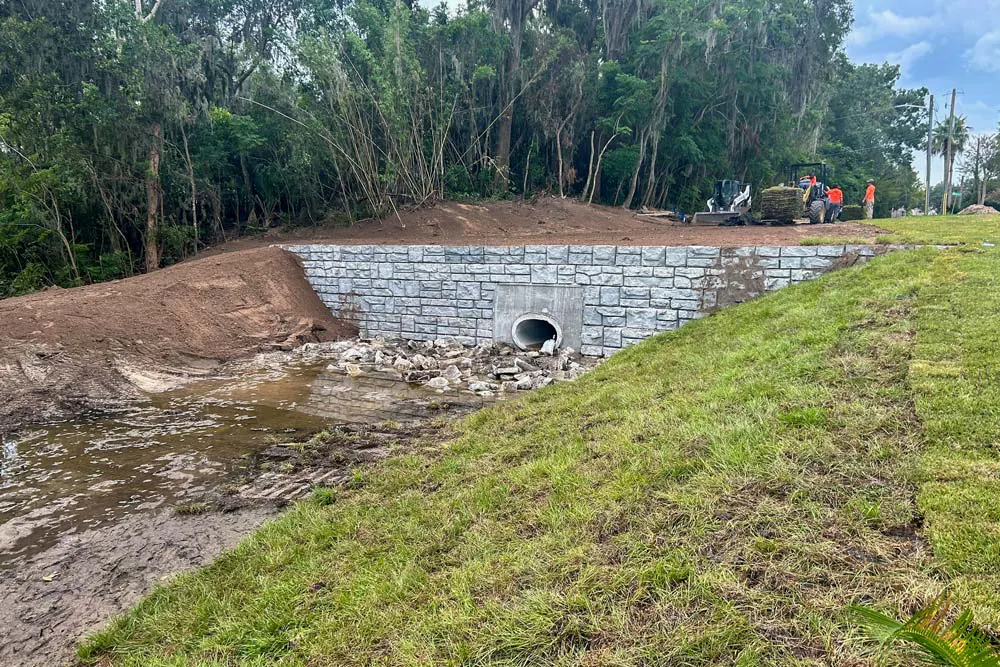
The location presented an additional construction challenge. With the river at one end of the street and an established neighborhood surrounding the project, there was limited room to stage retaining wall blocks, drainage stone, and installation equipment. Tidal fluctuations and wet conditions along the St. Johns River further complicated work at the wall location.
THE SOLUTION
With a precedent already established nearby, the City didn't have to start from scratch when selecting a riverfront retaining wall solution for Clay Street. For the Bayard Street project, the City had considered sheet pile and a segmental retaining wall (SRW) alternative before choosing Redi-Rock for its competitive price point, faster installation, and aesthetic appeal. When Clay Street became the next priority, the City wanted to maintain the standard established at Bayard Street while continuing to make responsible use of taxpayer dollars.
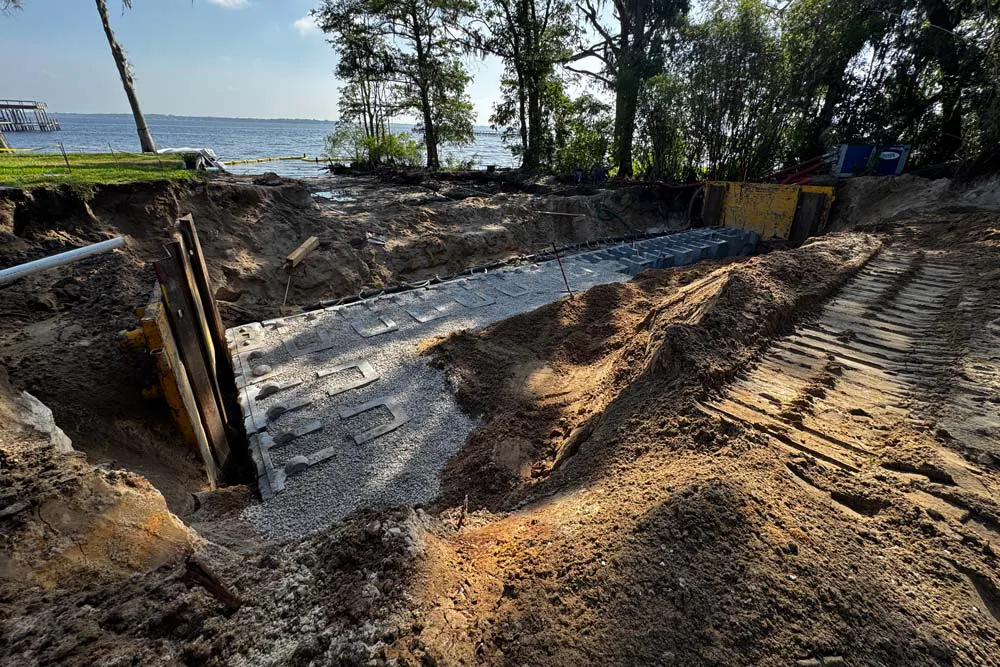
Redi-Rock again aligned with several important project needs:
- Efficient Installation. Precast blocks arrived ready for installation, enabling the contractor to make steady progress in a challenging riverfront construction environment.
- Adaptability to a Tight Site. Limited staging space was a significant consideration at the end of Clay Street. Truemont Materials could coordinate block deliveries with installation progress rather than requiring large quantities of material to be stored onsite.
- Design Flexibility. The wall incorporated multiple Redi-Rock block depths and configurations to meet the project's design requirements.
- Competitive Project Economics. The City's previous experience with Redi-Rock demonstrated it was a competitively priced option compared with alternatives, an important consideration as Green Cove Springs continues to invest in riverfront resiliency.
- Continuity With Bayard Street. Ledgestone texture allowed the City to carry forward the natural stone appearance established with its previous riverfront improvement.
Together, these advantages gave the City a riverfront retaining wall solution that balanced constructability, cost, and aesthetics while supporting its broader resiliency goals. The result built on the success of Bayard Street while adapting to the specific challenges of the Clay Street site.
“Based on its performance, appearance, and overall value, Redi-Rock has become the City of Green Cove Springs’ standard for these types of applications." –Greg Bauer, Public Works Director, City of Green Cove Springs
THE PROJECT
Careful coordination between Truemont Materials and Jax Utilities Management helped turn limited staging space into a manageable construction constraint. Rather than delivering large quantities of blocks that would have to remain onsite until needed, Truemont coordinated deliveries around the contractor's installation progress. New loads arrived as Jax Utilities Management was finishing the blocks from the previous shipment, substantially reducing the space required for block staging.
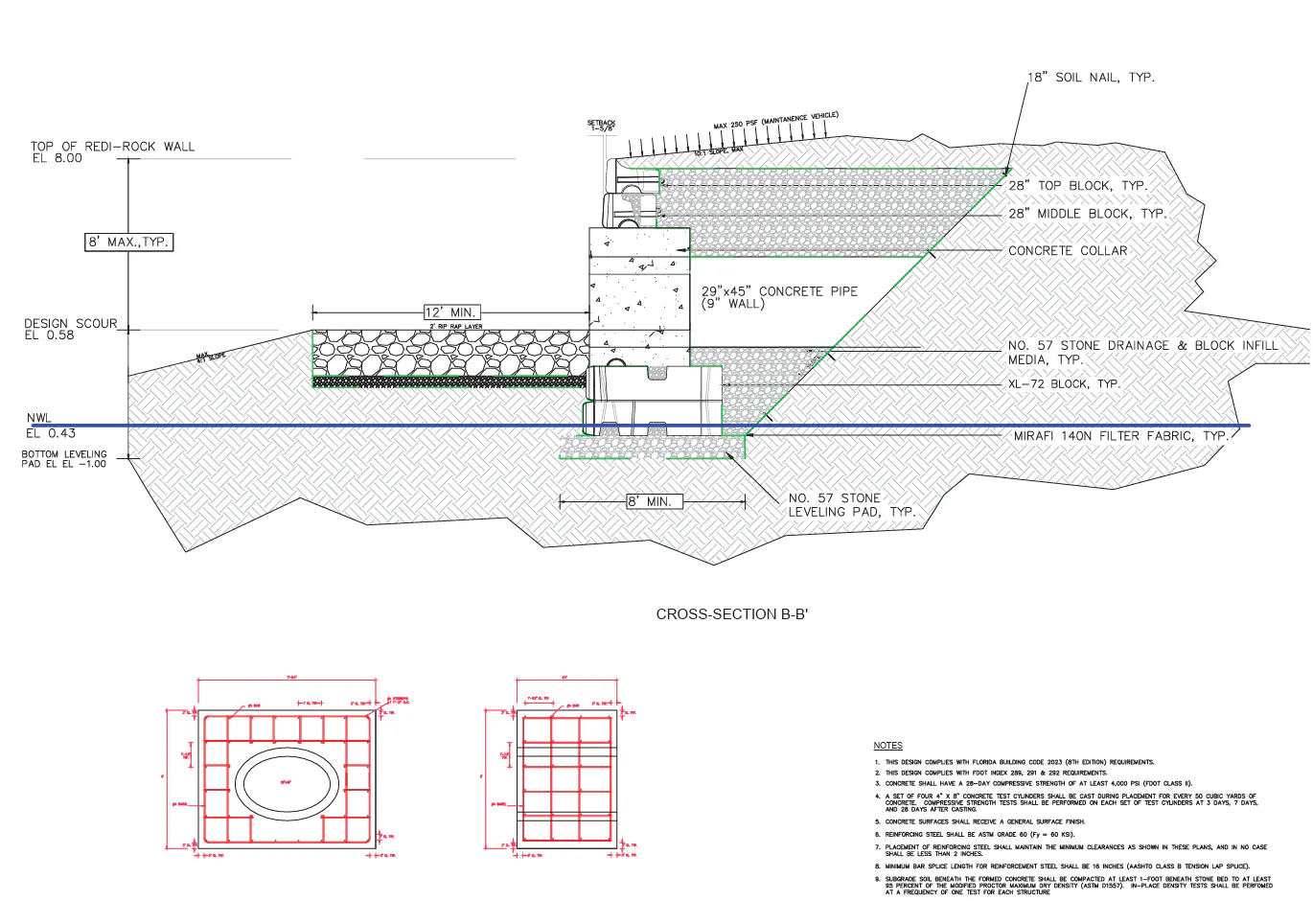
Conditions at the river's edge required their own construction approach. Tidal fluctuations and wet ground had to be managed throughout installation. A 12-in leveling pad was placed over filter fabric to establish the wall foundation, while a Kelly well was used to manage water at the site.
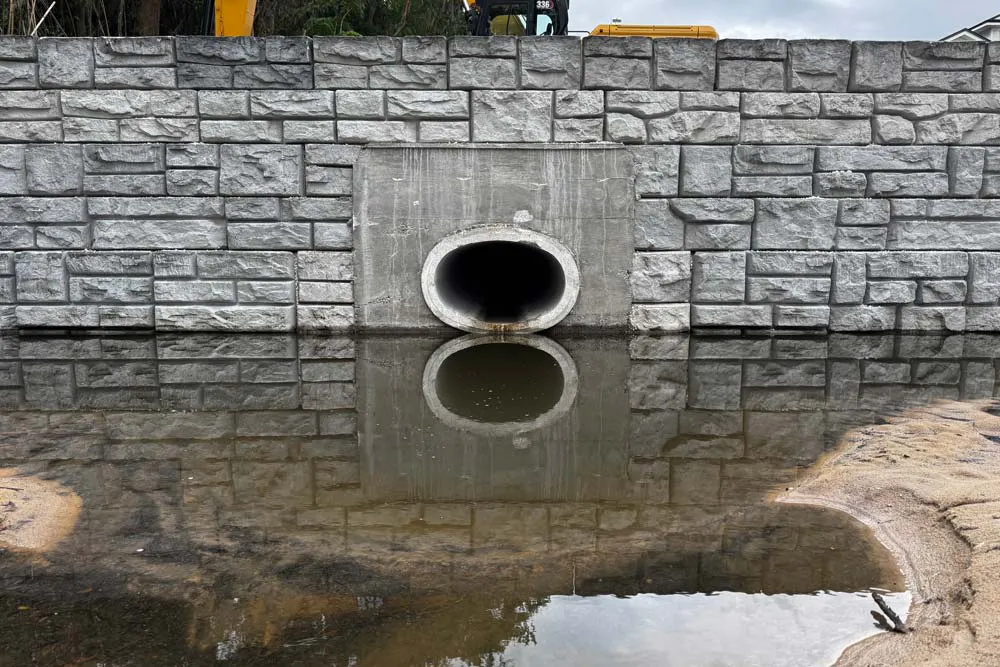
At Clay Street, the Redi-Rock wall had to work alongside critical stormwater infrastructure. A 29-in x 45-in concrete drain pipe was incorporated through the wall, exiting at the scour elevation to discharge into the St. Johns River. The detail demonstrates Redi-Rock's flexibility to accommodate drainage systems, nearby utilities, and other site-specific infrastructure, an important consideration when designing within established streets and constrained municipal sites.
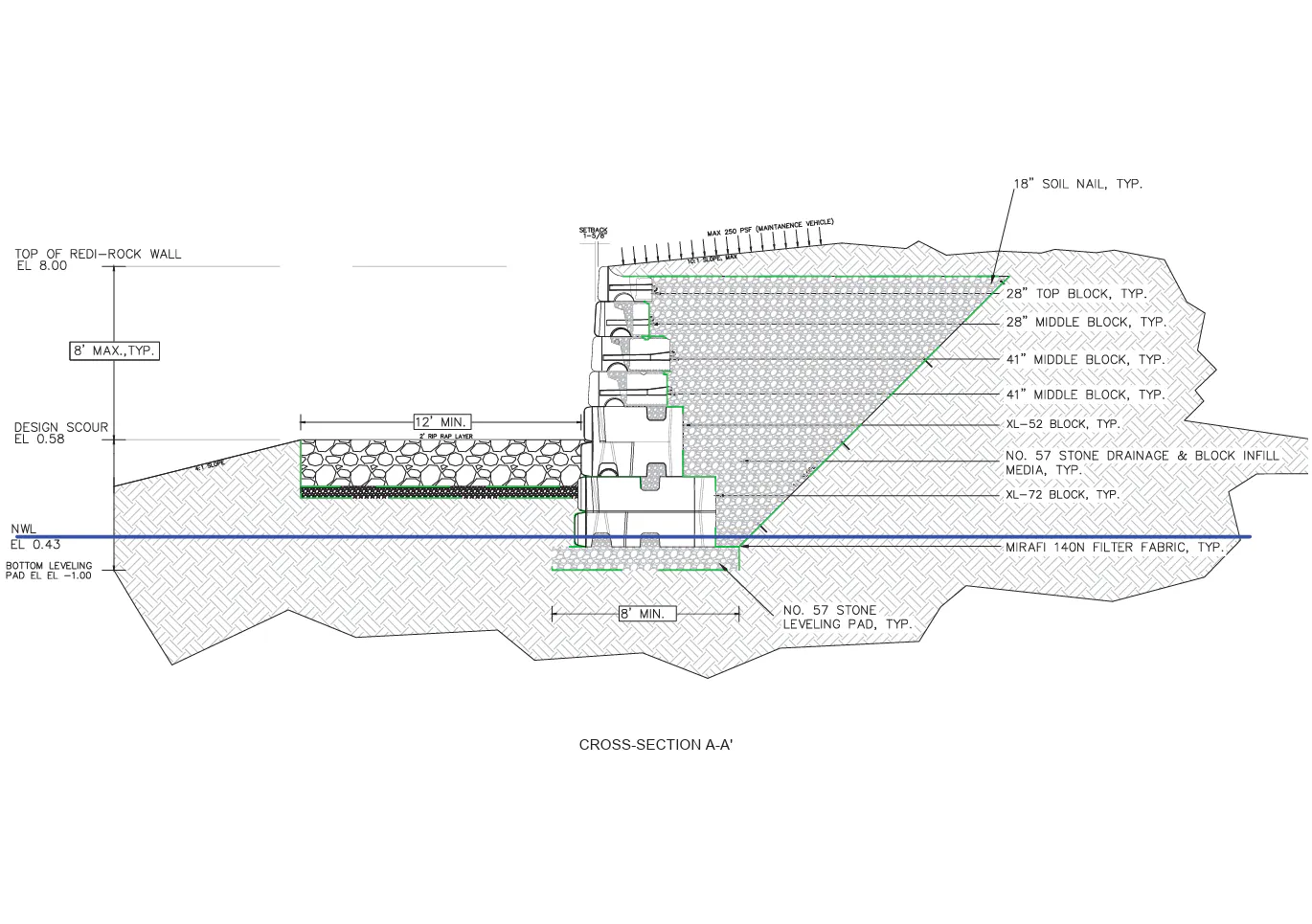
Jax Utilities Management installed approximately 1080 sq ft of Redi-Rock along 90 linear ft of riverfront. Reaching approximately 12 ft in height, the wall portion of the project was completed in roughly two weeks.
The new wall was one component of a broader infrastructure improvement aimed at addressing multiple vulnerabilities at Clay Street. The project extended from Magnolia Avenue to St. Johns Avenue and included the replacement of aging stormwater pipes along with the new headwall at the St. Johns River. Once that infrastructure work was complete, the City's historic brick roadway was restored.
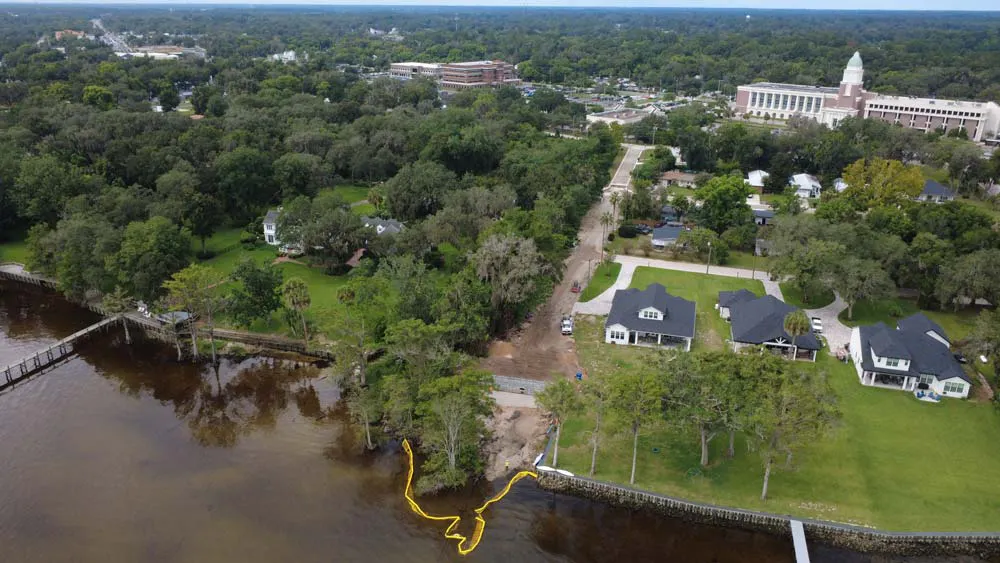
Taken together, the improvements addressed both the riverfront edge and the infrastructure that moves stormwater through the street, allowing the City to tackle several needs within one coordinated project rather than simply repairing the visible hurricane damage.
“Installation takes approximately 50% of the time required for a traditional headwall, significantly shortening the overall project schedule. Because the blocks are manufactured off-site and delivered ready for placement, the system requires considerably less on-site forming, reinforcement, and concrete work than a traditional poured-in-place headwall. The faster installation also reduces equipment time, labor requirements, traffic impacts, and disruption to nearby residents and properties.” – Greg Bauer
MORE ARTICLES
Municipalities rely on Redi-Rock for vital resiliency and repair projects
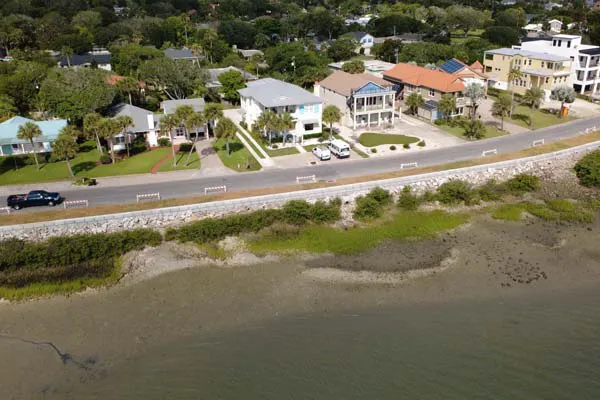
Explore how St. Augustine used Redi-Rock from Truemont Materials to harden a particularly vulnerable stretch of a key roadway along its coastline.
THE OUTCOME
Clay Street transformed from a hurricane-damaged, dead-end street with aging infrastructure into another completed piece of Green Cove Springs' larger riverfront resiliency effort.
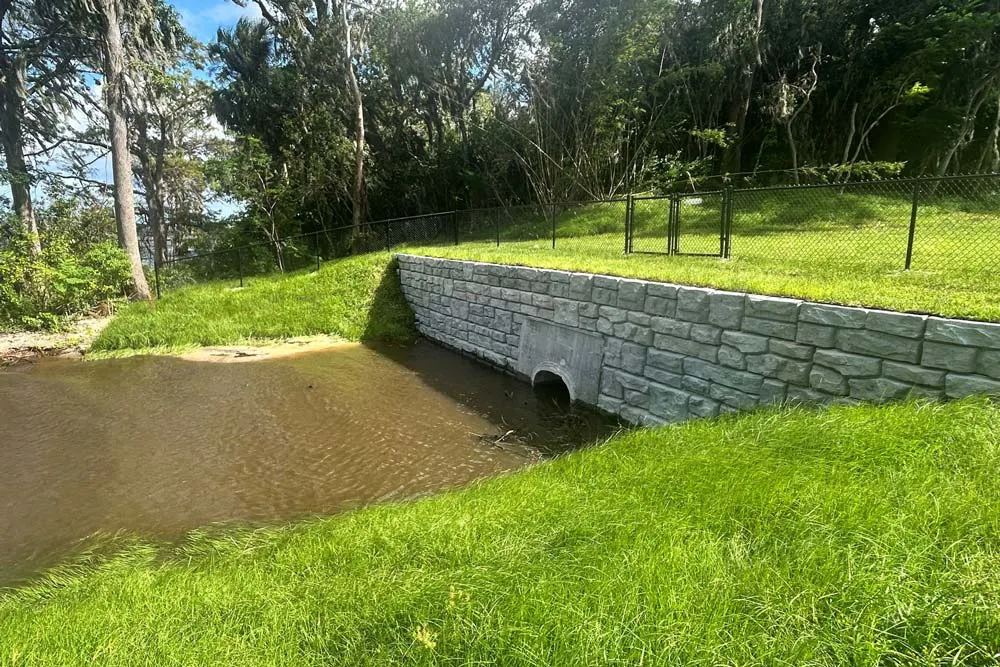
Construction on the overall project began on April 1, 2026, with up to 300 days originally projected for completion. Although work had initially been anticipated to continue into March 2027, the project was completed by the end of September 2026, six months ahead of the originally projected completion date.
The completed project provides a new Redi-Rock riverfront headwall, renewed stormwater infrastructure, and a restored historic brick roadway. Its Ledgestone texture also carries forward the appearance established at Bayard Street, helping create visual consistency as the City progresses from one riverfront resiliency improvement to the next.
“Communities need infrastructure solutions that balance durability, construction efficiency, site constraints, appearance, and long-term value. Redi-Rock provides an engineered system that can be adapted to a variety of applications and installed efficiently using modular precast blocks. It offers communities a superior-quality product that is cost-effective, installation-friendly, and well suited for projects where resilience and long-term performance are priorities. – Greg Bauer
Clay Street demonstrates how Green Cove Springs is moving beyond individual post-storm repairs. By addressing vulnerable locations through a planned series of infrastructure improvements, the City is steadily advancing its resiliency efforts along the St. Johns River.
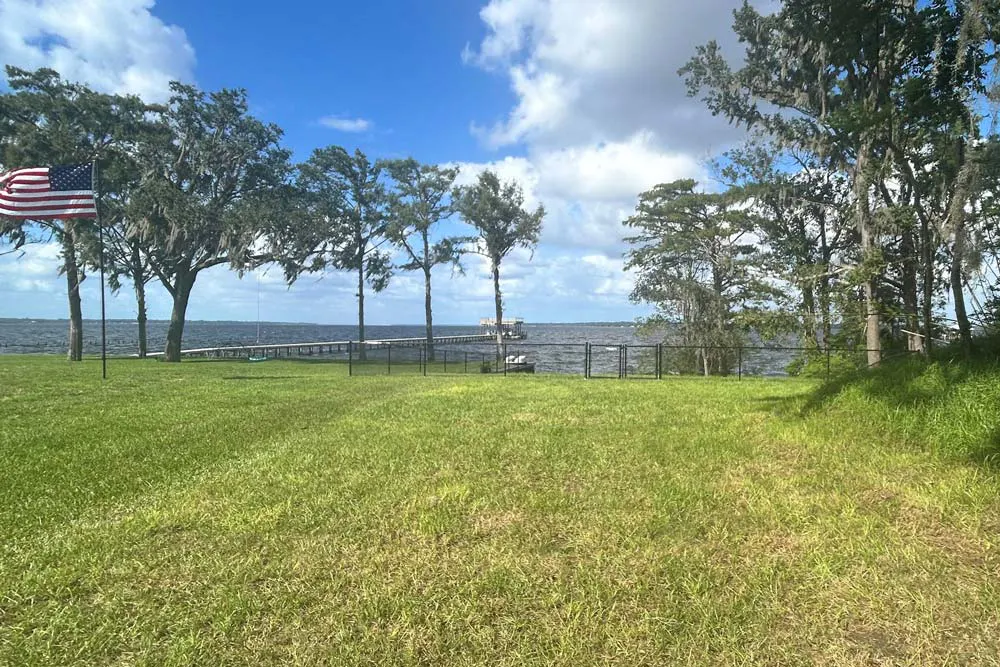
Across storm-prone communities, municipalities are turning to Redi-Rock not only to repair damaged infrastructure, but to build greater resiliency against the storms still to come. From hurricane-damaged riverfront streets to eroding shorelines and other vulnerable infrastructure, Redi-Rock gives communities a proven precast solution for rebuilding with the future in mind. Its combination of structural performance, efficient installation, design flexibility, and natural stone aesthetics has made the system a trusted choice for municipalities investing in infrastructure designed to withstand even the most challenging conditions.
As far as Bauer and the City of Green Cove Springs is concerned, Redi-Rock will continue to play a vital role in the City’s efforts to safeguard both its infrastructure and its residents. “By standardizing the use of Redi-Rock for appropriate applications, the City can improve construction quality, simplify future maintenance, and provide a reliable approach to similar stormwater and infrastructure projects,” he stated. “This project represents a long-term investment in public safety, infrastructure reliability, and reduced maintenance and repair costs. It demonstrates the City’s commitment to building infrastructure that can better withstand changing weather conditions and continue serving the community for many years.”
Products Featured
- 28 in Positive Connection (PC) Middle Blocks
- 28 in Top Blocks
- 41 in Hollow-Core Blocks
- 52 in XL Hollow-Core Blocks
- 72 in XL Hollow-Core Blocks
Strengthening Infrastructure Along the Water?
Put Redi-Rock to work on riverfront, shoreline, and storm-damaged infrastructure projects with support from the Truemont Materials team.