St. Augustine Selects Redi-Rock Over Cast-in-Place for Vital Coastal Resiliency Project
Project Owner: City of St. Augustine, Florida
Engineer/Designer: Baxter & Woodman
Installer: Osborn Construction & Design
Location: St. Augustine, Florida
Year Built: 2026
Wall Size: 5200 sq ft
Wall Type: Gravity
Texture: Limestone
Along a vulnerable stretch of Inlet Drive in St. Augustine, Florida, the city needed a coastal retaining wall solution to stabilize and elevate the shoreline in the North Davis Shores neighborhood that had been impacted by coastal erosion. As part of a broader effort to provide greater flood protection for this critical residential roadway, the project also included upgrades to existing stormwater infrastructure and the addition of a tide check valve to help prevent tidal backflow.
Redi-Rock from Truemont Materials provided a solution for the Inlet Drive Shoreline Resiliency Project that allowed the new retaining wall to be constructed landward of the existing waterfront wall, helping limit unnecessary disturbance to nearby mangroves while addressing the project’s cost, constructability, drainage, and aesthetic requirements.
THE CHALLENGE
Repeated storm surge and erosion made a low-lying section of Inlet Drive a priority for the City of St. Augustine.
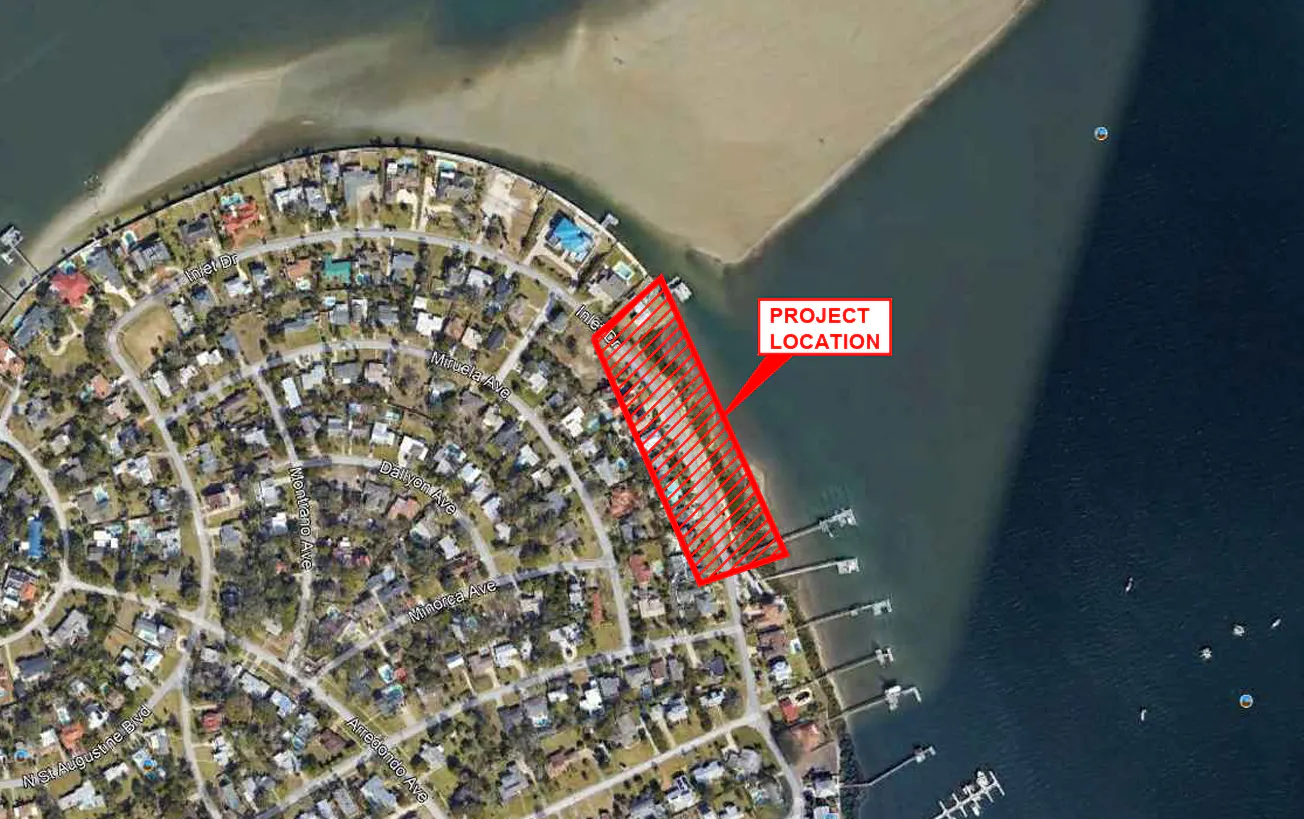 Map showing the location of the Inlet Drive Shoreline Resiliency Project in St. Augustine, Florida.
The project location is the lowest point in the island chain, where wave action from nor'easters and other coastal storms could push through. Inlet Drive runs along a particularly vulnerable stretch of St. Augustine's shoreline, directly exposed to conditions from the nearby inlet. The risks became especially apparent following Hurricane Matthew in 2016 and Hurricane Irma in 2017.
“That particular section on Inlet Drive that this city owns, we were suffering from erosion, and that storm surge comes in, and it just overtops the road, and it just takes things with it and moves things around… it was a case where if we didn't stabilize that shoreline piece, we were at risk of potentially having a really much larger and very expensive infrastructure problem if that road was to get impacted.” —Jessica Beach, Chief Resiliency Officer, City of St. Augustine
The site's environmental constraints added another challenge. Existing mangroves needed to be avoided, and the project team preferred not to remove the existing waterfront wall. Moving construction farther toward the water could also introduce additional wetland impacts, mitigation requirements, costs, and permitting time.
Finally, an existing storm outfall pipe was allowing tidal water to back up through it, causing road flooding. The project would also need to account for sea-level rise by elevating the shoreline revetment, further addressing erosion, undersized drainage, and tidal flooding. A larger drainage pipe would need to be installed to achieve this goal.
Those considerations led the project team toward a different approach: build the new coastal retaining wall landward of the existing structure.
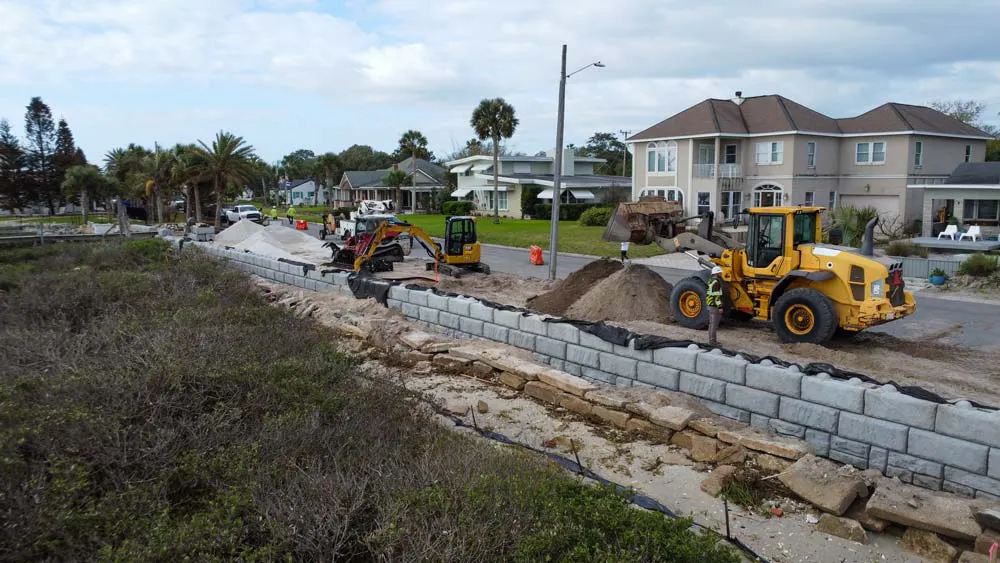 The new Redi-Rock retaining wall is being installed immediately behind the failing existing wall.
THE SOLUTION
To address the shoreline’s immediate structural needs while supporting its long-term resilience, the City of St. Augustine’s Public Works Department pursued a hybrid strategy combining hard infrastructure with natural shoreline enhancements. Redi-Rock served as the structural component of this approach, providing a new retaining wall designed to stabilize and elevate the shoreline, while living shoreline elements, such as native coastal vegetation, absorb wave energy, reduce erosion, and support the surrounding coastal habitat.
Redi-Rock gave the project team a precast retaining wall option that fit the available footprint while addressing construction, cost, drainage, and aesthetic considerations.
Truemont Materials had begun conversations with the City of St. Augustine several years before construction, introducing Redi-Rock as a potential fit for the project. As the design developed, several characteristics of the system aligned with the city's priorities:
- Smaller Project Footprint. Locating the Redi-Rock wall behind the existing waterfront structure allowed the team to work landward while avoiding the mangroves.
- Simplified Environmental Approach. Avoiding additional wetland impacts helped the project team steer clear of the added mitigation, permitting, cost, and schedule considerations that could accompany a more environmentally intrusive solution.
- Competitive Installed Cost. Cost was a major consideration for the city. Truemont Materials reports that contractors working with the company have seen total installed Redi-Rock costs approximately 30–40% lower than those for cast-in-place walls in comparable applications.
- Efficient Construction. The modular precast system provided an installation approach that helped the project remain on schedule without the onsite forming and pouring associated with cast-in-place construction.
- Integrated Drainage. The wall's drainage characteristics were particularly important in a tidal environment where water may move both toward and away from the wall. The Redi-Rock wall system also allows for the integration of drainage pipes, necessary to upgrade the currently undersized drainage pipe of the existing wall.
- Context-Sensitive Aesthetics. Redi-Rock's textured appearance enabled the design team to create an engineered coastal structure that complemented St. Augustine's historic surroundings.
“When we chose the Redi-Rock, cost was a big driver. The footprint and then the constructability as far as timeline, and then the aesthetics… I've had lots of compliments from our residents. They're like, wow. This doesn't really look like an engineered wall.” -Beach
The appearance was an especially important consideration in a city known for historic coquina construction.
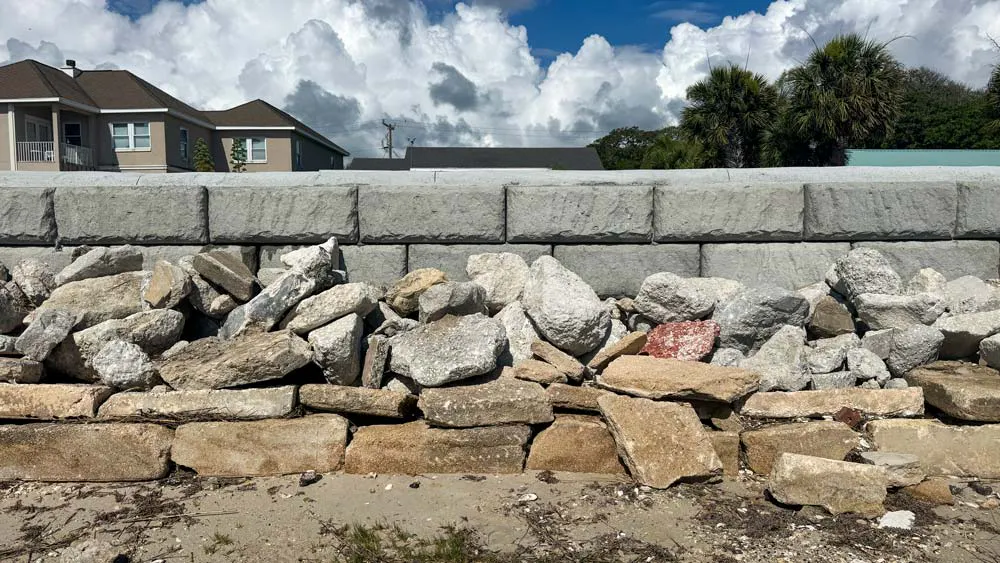 Detailed view of Redi-Rock’s Limestone texture showing similarities to the texture of historic coquina walls found throughout the St. Augustine area.
Laura Mahoney of engineering firm Baxter & Woodman, also appreciated the Limestone-textured wall’s similarity to the area’s natural stone. When you think about the city of St. Augustine, you think of historic coquina walls,” Mahoney explained. “So many structures are made from the coquina, so the way the exterior of the Redi-Rock product was enough similar to that. We felt that it was consistent with what you would see around the city of St. Augustine.”
MORE ARTICLES
Cities count on Redi-Rock’s resiliency to stand up to water
Explore how the City of Green Cove Springs used Redi-Rock to stabilize an eroding St. Johns River shoreline while managing stormwater and changing water levels.
THE PROJECT
Approximately 5,200 sq ft of Redi-Rock was installed along 642 linear ft of Inlet Drive in roughly three-and-a-half weeks. Truemont Materials supplied the Redi-Rock blocks for the project, with Osborn Construction & Design completing the installation. The gravity wall incorporated 41 in Middle Blocks at the base, followed by 28 in Middle Blocks and Freestanding Straight Middle Blocks along the top. The wall was finished with curved cast-in-place concrete coping that follows the alignment of the Redi-Rock wall.
Installer Parker Osborn of Osborn Construction & Design highlighted the importance of the wall’s drainage capabilities because of the site's exposure to significant tidal fluctuations, storm surge, and wave action. How the Redi-Rock system handles water was an important advantage for this particular application compared with the originally considered cast-in-place approach.
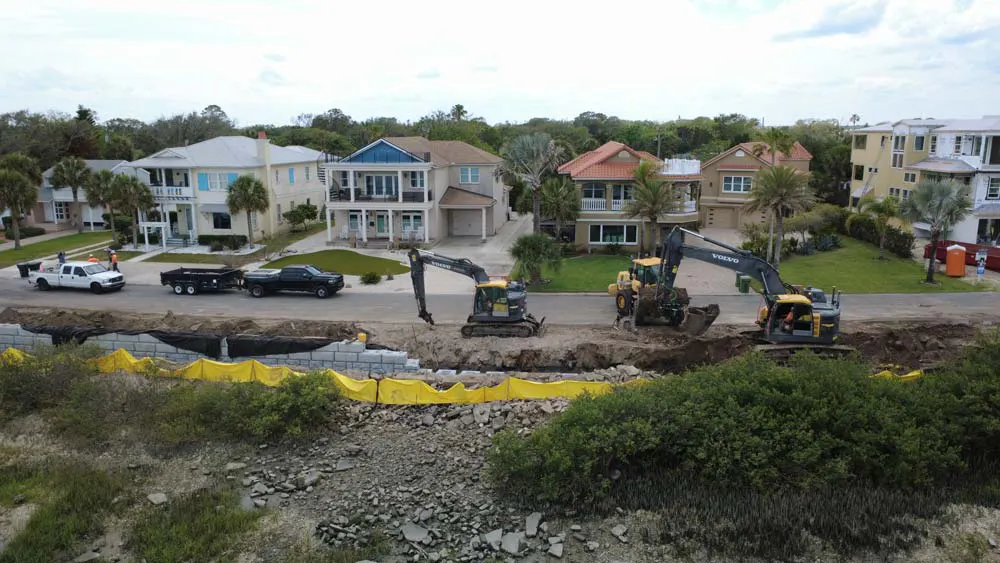 Redi-Rock retaining wall being installed along Inlet Drive as part of the shoreline resiliency project.
“A big benefit of the Redi-Rock system here was the drainage allowing the hydraulic loading to move back and forth. The tidal influx is a lot here, so if we get a seven-foot tide, that's gonna bring us over the wall, and then we got wave action on top of that coming in from nor'easters or hurricanes. A lot of water is moving either over top of the wall or through the wall, and so it really helps reduce the loading on the wall, versus a cast-in-place [alternative].”-Parker Osborn, Osborn Construction & Design
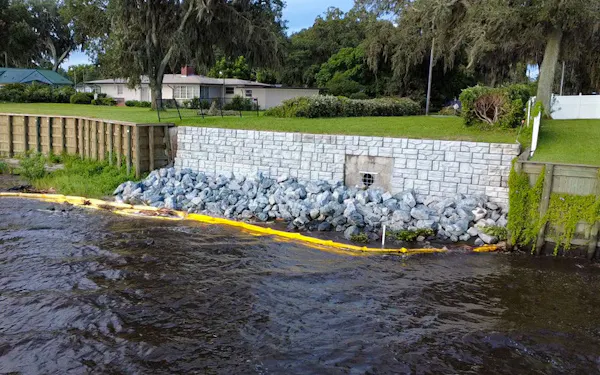
The Redi-Rock wall also facilitated the installation of a larger storm outfall pipe to further protect the adjacent roadway from overtopping or flooding caused by tidal fluctuations and surges.
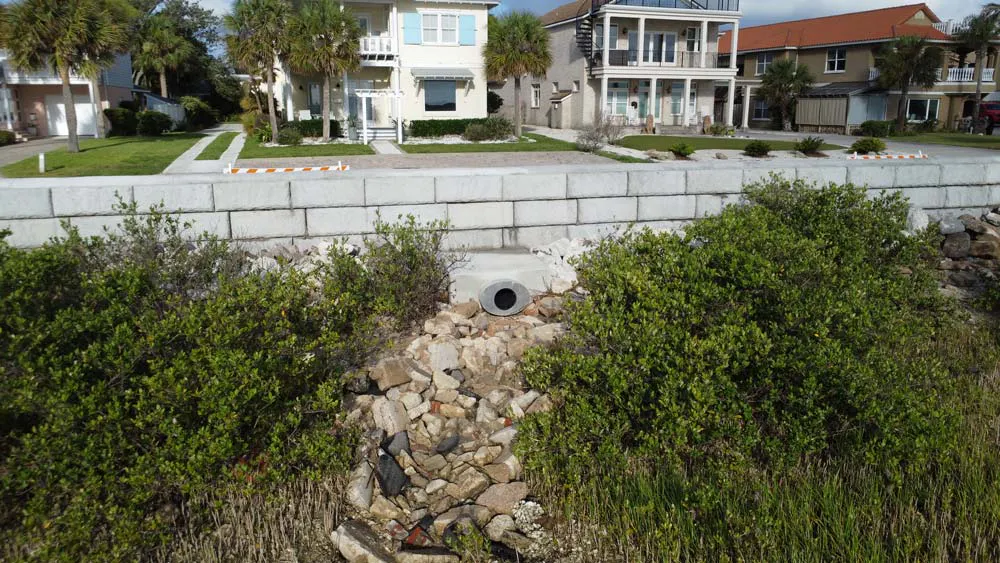 Redi-Rock retaining wall with a stormwater outfall pipe extending through the wall to help manage tidal flooding and roadway drainage.
THE OUTCOME
The Inlet Drive Shoreline Resiliency Project was finished in June 2026, just ahead of hurricane season, and provides the City of St. Augustine with a new line of defense along one of its most vulnerable stretches of shoreline.
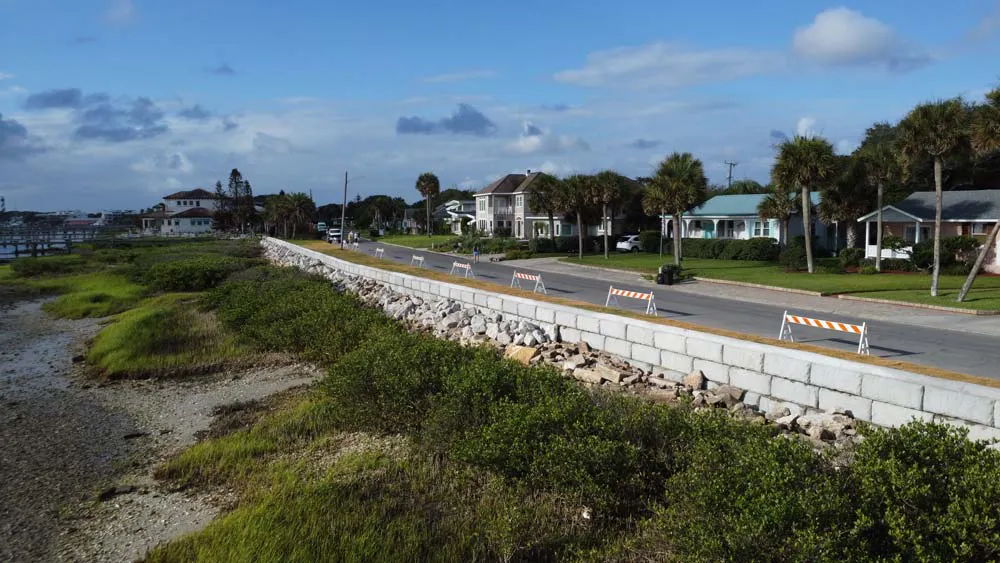 The completed Redi-Rock gravity wall, stretching nearly 650 linear feet, included almost 5200 square feet of face surface.
The project met the City’s timing and cost needs and delivered a final appearance that has received positive feedback from residents.
"We actually were ahead of schedule and on budget. So that is a win in my book.”-Jessica Beach
The Inlet Drive Shoreline Resiliency Project not only protects a key stretch of infrastructure in a particularly vulnerable area, but it also offers a real-world water-control model that the city can monitor and build upon as it continues to strengthen vulnerable infrastructure and advance coastal resiliency efforts throughout St. Augustine.
Products Featured
- 28 in Middle Blocks
- 41 in Middle Blocks
- Freestanding Straight Middle Blocks
Planning a coastal resiliency or shoreline stabilization project?
See how Redi-Rock from Truemont Materials can provide a constructible precast retaining wall solution for challenging coastal environments throughout Florida and South Georgia.